

Standardizing Microphone Systems Across Enterprise Spaces Without Sacrificing Performance
Standardization is one of those ideas that makes perfect sense until you try to apply it across real projects.

On the surface, it's efficient. One microphone platform, one approach, one set of expectations across multiple rooms, buildings, or campuses. It simplifies procurement, speeds up design, and makes support more manageable. Most enterprise clients are asking for it. The challenge is that no two rooms behave the same way.
A boardroom used for executive decision-making has very different requirements than a divisible training space. A courtroom or council chamber has different expectations than a collaboration area or conference center breakout room.
Trying to apply a single solution across all those environments can create gaps in performance if the system isn't flexible enough to adapt.
The goal is not just standardization. It is standardization that still performs in real-world conditions.
Because once the rooms are in use, that consistency is what defines whether the system feels reliable or not.
Why Clients Push for Standardization
From the client side, the motivation is clear. They are managing multiple spaces, often across multiple locations, and they want systems that are predictable.
They want their teams to walk into any room and know how it works. They want fewer service calls, fewer variations, and a clearer path for upgrades over time.
There is also a cost factor. Standardizing components can simplify purchasing and reduce long-term maintenance complexity. From an operational standpoint, it makes sense. From a performance standpoint, it needs to be handled carefully.
Where Standardization Starts to Break Down
The issues tend to show up when the same design approach is applied to spaces with different acoustic and functional requirements.
A system that performs well in a smaller, controlled conference room may not scale effectively into a larger boardroom or a space where participants are spread out and speaking from different positions.
Similarly, a ceiling-based approach that works well in a flexible collaboration space may not deliver the same level of intelligibility required in a courtroom or executive environment. The result is inconsistency.
Some rooms perform well. Others require adjustment. Over time, confidence in the standardized approach begins to erode.
This is where integrators often find themselves compensating after installation, rather than designing for performance from the beginning.
Designing a Standard That Actually Holds Up
The key is to standardize the approach, not just the product. That means understanding how different microphone types fit into a broader system strategy and where each one should be applied.
In spaces where speech precision is critical, such as boardrooms or council chambers, a close-mic approach using gooseneck microphones still provides the most consistent results.
The proximity to the speaker and controlled pickup pattern reduce variability and support clear communication, especially in high-stakes discussions.
In smaller, less formal rooms where simplicity is a priority, boundary microphones can provide a streamlined solution, as long as the environment remains controlled and user behavior is predictable.
In larger or more flexible environments, suspended ceiling microphones can support changing layouts and reduce visible hardware, provided the system is designed with the room's acoustics and usage in mind.
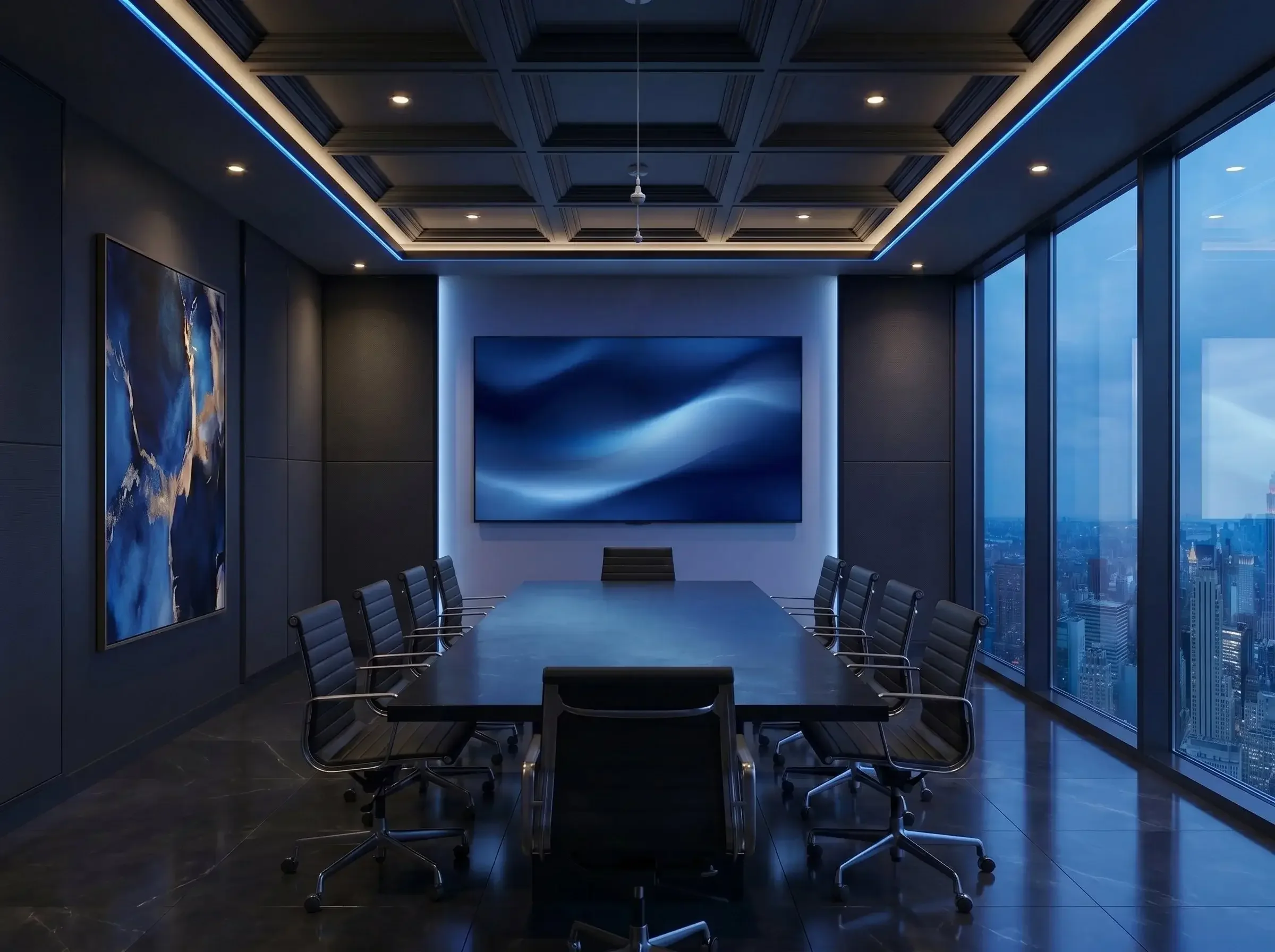
Standardization, in this context, becomes a framework. It defines how decisions are made, rather than forcing the same solution into every space.
The Role of User Experience in Standardization
Consistency is not only about hardware. It is also about how users interact with the system. Participants should be able to walk into different rooms and immediately understand how to engage. Clear visual indicators, intuitive mute controls, and predictable behavior across spaces all contribute to that experience.
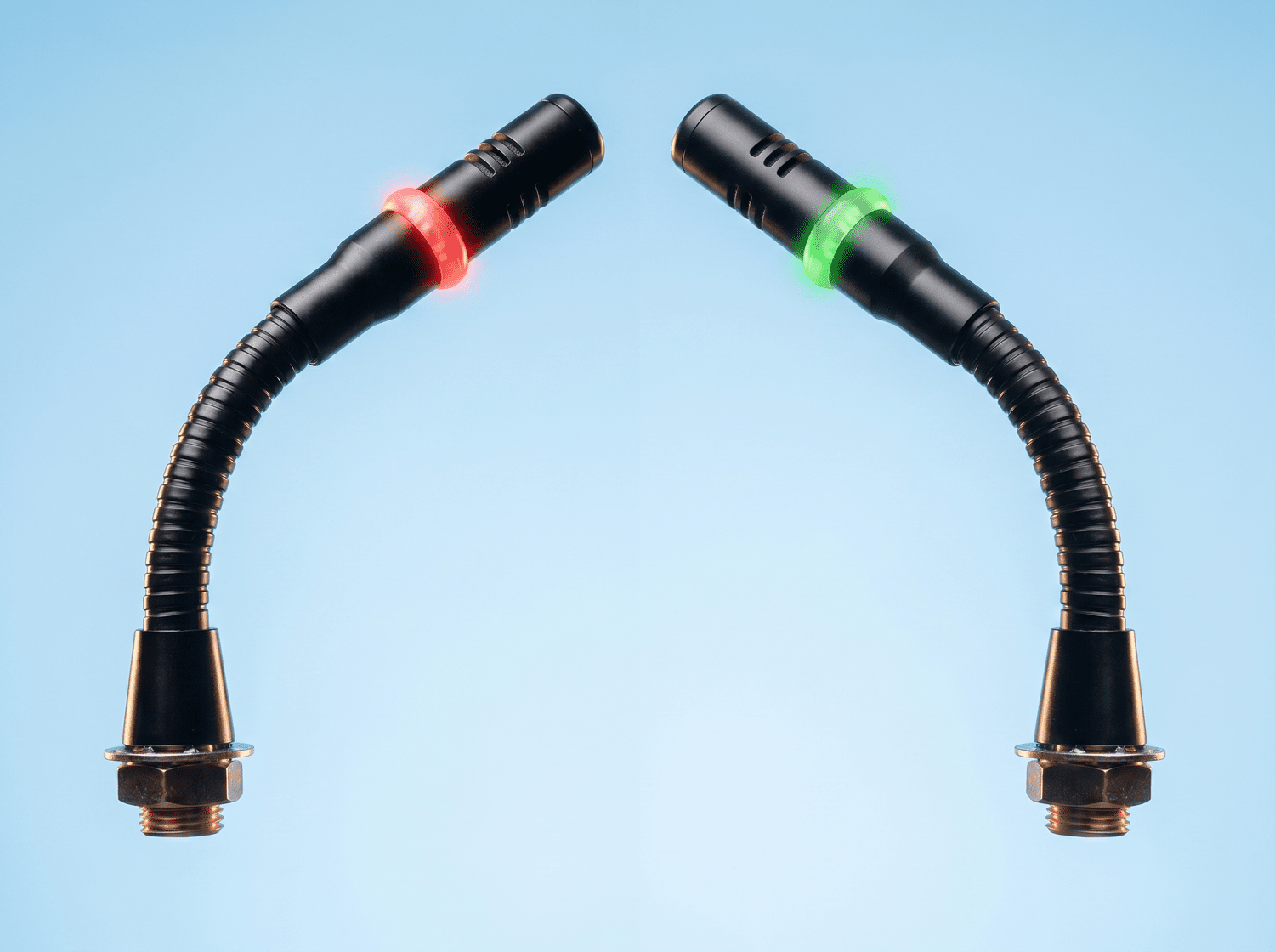
When the interface is consistent, users adapt quickly. When it varies, even slightly, hesitation creeps in. That hesitation impacts communication.
A standardized user experience, supported by consistent microphone behavior, is what allows systems to feel reliable across multiple environments. Clarity is confidence.
Balancing Performance with Design Expectations
Enterprise projects often involve strong architectural direction. Clean lines, minimal hardware visibility, and flexible layouts are common requirements. These goals are valid, but they can introduce tension when they conflict with performance.
A standardized system that prioritizes aesthetics over intelligibility will eventually create problems.
Those problems do not always show up during commissioning. They appear when the room is fully in use, when conversations are dynamic, and when the stakes are higher.
The role of the integrator and consultant is to navigate that balance. That means advocating for solutions that support the function of the space while still aligning with the overall design intent.
It is not about pushing back on design. It is about ensuring that the room performs the way it is expected to.
Standardization as a Long-Term Strategy
When done correctly, standardization becomes a long-term advantage. It allows organizations to:
- Scale systems across multiple locations
- Reduce training requirements
- Simplify support and maintenance
- Maintain consistent performance across spaces
More importantly, it builds trust. Users know what to expect. Systems behave consistently. Conversations happen without interruption. That is what clients are ultimately looking for.
What Clearly Different Looks Like in Enterprise Design
At Clockaudio, the focus is on supporting integrators with microphone solutions that can adapt to any framework. That means providing options that allow for precision where it is needed, flexibility where it is required, and consistency across different applications.
The goal is not to force a single approach, but to enable systems that perform reliably across a range of environments. Because in enterprise deployments, consistency is not just about matching equipment. It is about delivering the same level of clarity in every space.
The Last Word
Standardization is not about simplifying design to the lowest common denominator. It is about creating a repeatable approach that holds up under real-world conditions. That requires understanding how different spaces function, how users behave, and how microphone selection and placement influence performance.
When those elements are aligned, standardization becomes an advantage rather than a compromise. In environments where communication drives outcomes, that consistency is critical.
Every word matters.
Let's Keep the Conversation Going
How are you approaching standardization across your projects?
Are clients pushing for uniform systems, and how are you balancing that with performance requirements in different types of spaces?
If you are working through a multi-room or multi-site design, our technical and design team is always available to walk through your application and help develop a strategy that delivers both consistency and performance.
Talk Through Your ApplicationClockaudio USA serves as the U.S. and Mexico office and distributor for Clockaudio, a globally respected manufacturer of professional microphone solutions. Built on more than three decades of innovation and trust, Clockaudio USA delivers application-driven performance, engineering precision and streamlined project execution for the professional AV market.
For the latest information on products, news, and projects, follow Clockaudio on LinkedIn, Facebook, and Instagram.