

Designing for Speech Intelligibility in Mission-Critical Spaces
Most systems pass audio. Signal is present, levels are acceptable, and technically everything is functioning. That is not the standard in mission-critical spaces.
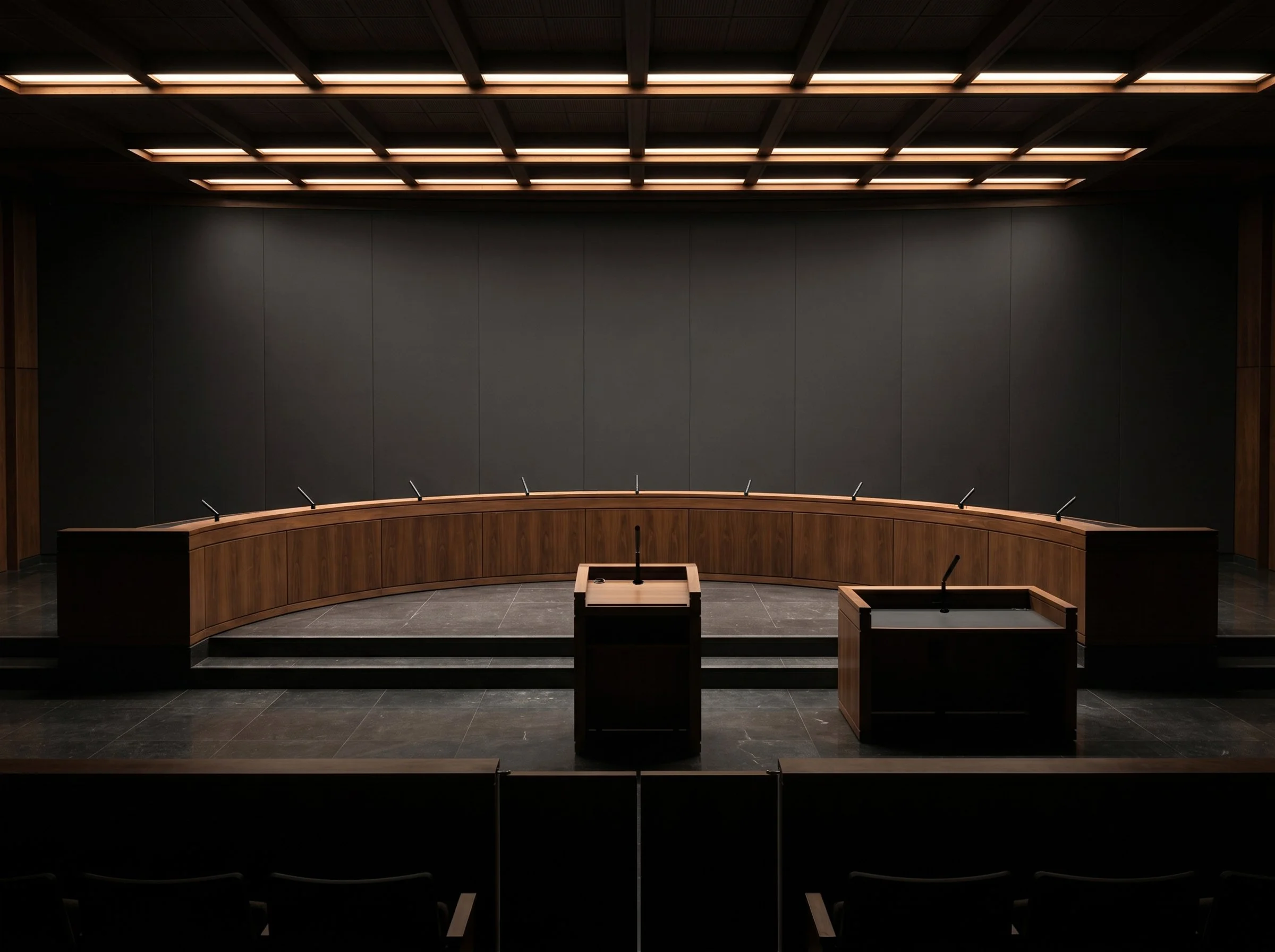
Think about the types of rooms being built today. Executive boardrooms where mergers and acquisitions are discussed. War rooms where teams are working through live operational decisions. Conference centers hosting investor briefings. Courtrooms where statements are recorded as part of a legal record. University auditoriums where lectures are captured and distributed beyond the room.
In these environments, communication is not casual. It carries weight. Decisions are made based on what is heard and understood in the moment. That is where the real question shifts.
It is no longer “does the system work?” It becomes “is every word understood, every time, by every participant in the room and on the far end?” Because in these spaces, every word matters.
What We Are Actually Designing For
Speech intelligibility is often discussed as a metric, but in practice it is an outcome of multiple design decisions working together.
At a technical level, it comes down to how effectively the system captures direct sound relative to reflected sound, how consistent the signal is across multiple talkers, and how well background noise is controlled. Distance between the microphone and the source remains one of the most critical factors, regardless of how advanced the processing is downstream.
You can quantify intelligibility with STIPA. Most experienced integrators do not need to. You hear it immediately when you walk into a room. Either voices feel present and natural, or they feel distant and inconsistent. Clients may not know the terminology, but they recognize the result. Clear audio builds trust in the system. Unclear audio erodes confidence quickly. Clarity is confidence.
Where Systems Begin to Break Down
The gap between design intent and real-world performance often shows up the first time the room is used under pressure.
A space can look exceptional during handoff. Finishes are clean, equipment is neatly integrated, and everything aligns with the architectural vision. The issues tend to surface when the room is fully occupied and the conversation matters. Voices may drop off at certain positions. Participants begin to repeat themselves. Remote attendees ask for clarification. At that point, the problem is rarely processing or tuning. It is almost always tied to how the audio was captured.
Common causes are familiar. Microphones placed too far from the talker, designs that prioritize broad coverage instead of controlled pickup, or layouts that do not account for reflective surfaces such as large conference tables. These are not unusual mistakes. They are often the result of competing priorities during design.
Microphone Selection Is a Design Decision, Not a Detail
Microphones are sometimes treated as interchangeable components, adjusted late in the process to align with budget or aesthetics. In practice, each type solves a very different problem and directly influences intelligibility.
A gooseneck microphone remains one of the most reliable tools for capturing speech with precision. The proximity to the speaker and the directional pickup pattern provide a level of consistency that is difficult to replicate with other approaches.
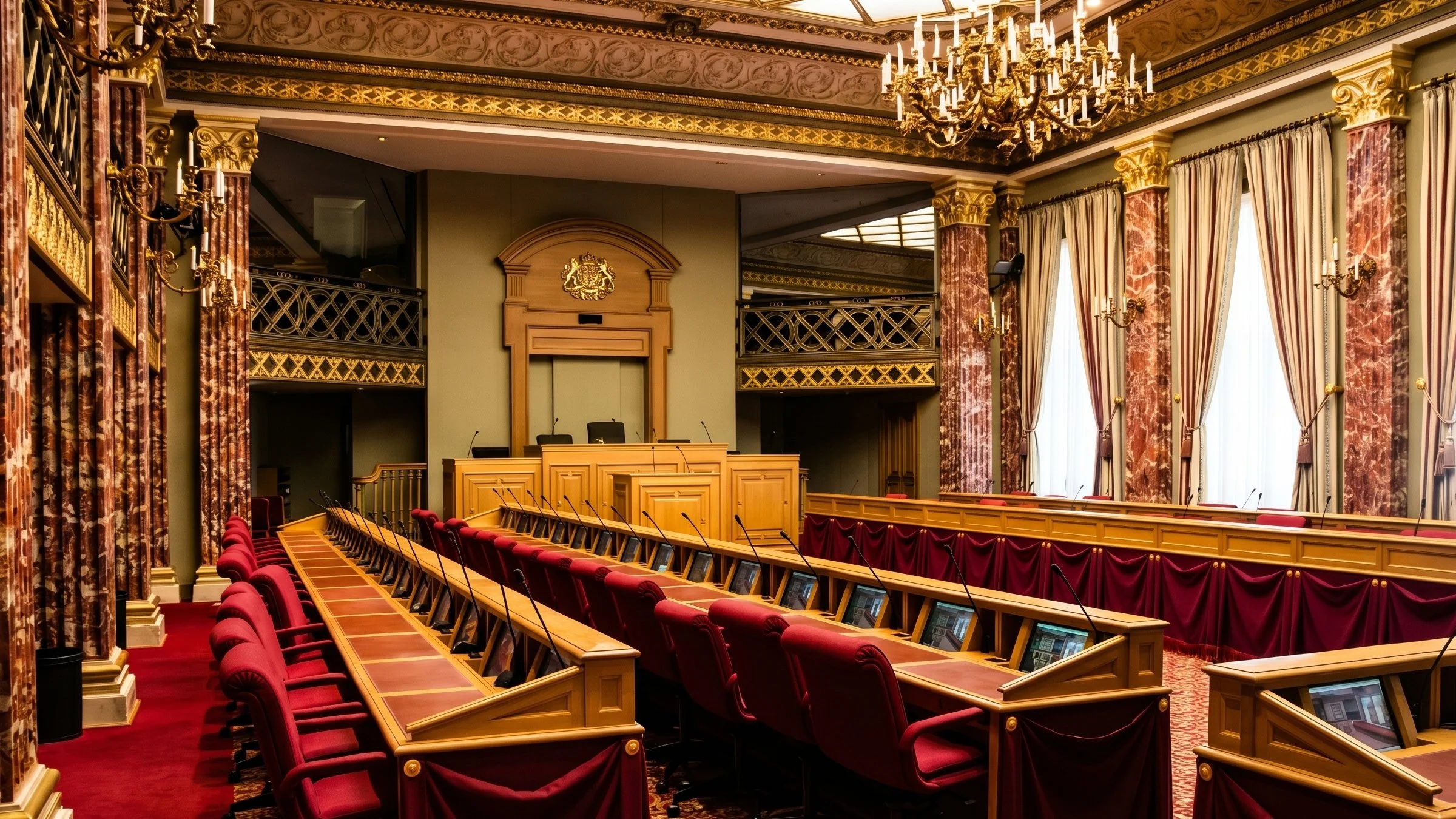
In boardrooms, council chambers, and courtrooms, this level of control is often necessary.
Here, priority may focus on integrated LED status indicators and clear mute functionality to help users understand when they are active, which improves overall communication flow.
Boundary microphones can be effective in smaller, controlled environments where participants remain seated and the room acoustics are predictable. As the space grows or user behavior becomes less structured, the wider pickup pattern introduces more ambient sound, which can reduce intelligibility.
Suspended ceiling microphones are increasingly specified, particularly in spaces where aesthetics and flexibility are priorities.
Removing microphones from the table can create a cleaner visual design and simplify reconfiguration of the space. At the same time, these systems place greater demands on ceiling height, acoustic conditions, and system tuning. When designed carefully, they can perform well. When applied without sufficient consideration, they can contribute to inconsistent audio performance.


Designing for Performance, Not Just Appearance
One of the more challenging aspects of professional AV design is balancing system performance with architectural intent.
It is not uncommon for integrators and consultants to be asked to minimize or eliminate visible microphones to maintain clean lines across a table or unobstructed sightlines within the room. On paper, that request may make sense to some, but in practice, the room rarely remains in that idealized state.
Once a meeting begins, the table fills with laptops, papers, phones, notepads, and glasses of water. These are not edge cases. They are normal conditions in long, high-stakes meetings. Those same objects introduce reflections, obstructions, and unpredictable changes to the acoustic environment.
Designing around a perfectly clean table surface often ignores how the room is actually used. When intelligibility suffers, the cost is not aesthetic. It is functional.
There is a point where the purpose of the room has to take priority.
If the space is built to support mission-critical conversation, the system must be designed to capture that conversation accurately. That is not in conflict with good design. It is part of it.
Placement Still Carries the Load
Regardless of the microphone type, placement remains one of the most important factors in achieving intelligibility.
Distance from the speaker, alignment with seating positions, and the relationship between the microphone and reflective surfaces all influence the final result. A well-placed microphone simplifies everything that follows. DSP behaves more predictably, commissioning is more efficient, and the system performs consistently across different use cases.
Poor placement introduces variables that are difficult to correct later. No amount of processing can fully compensate for weak source capture.
The Role of the User
User interaction continues to be an overlooked part of system performance.
If participants are unsure whether they are live or muted, hesitation becomes part of the conversation. If controls are unclear, users disengage from the system. These are small moments, but they add friction to communication.

Clear visual indicators, such as LED status, and intuitive control interfaces reduce that friction. When users understand the system, they use it more effectively. That is when conversation moves forward naturally.
Designing for the Far End
In many spaces, the far end is just as important as the room itself.
Remote participants rely entirely on what the microphones capture. They do not benefit from proximity, visual cues, or the acoustic characteristics of the room. Inconsistent pickup or elevated background noise is immediately noticeable.
Designing for intelligibility today requires thinking beyond the physical space and ensuring that every participant, regardless of location, experiences the same level of clarity.
What Clearly Different Means in Practice
The difference between systems that meet expectations and those that exceed them is rarely defined by a single component. It is the result of decisions made throughout the design process.
At Clockaudio, the focus is on supporting those decisions with microphone solutions that prioritize accurate speech capture, flexibility in application, and consistency in performance. The goal is not simply to provide products, but to enable systems that deliver clarity in real-world conditions.
Because in mission-critical environments, clarity is not a feature. It is the requirement.
The Last Word
There is no universal microphone solution that works for every space. Success comes from aligning the application, the room, the user behavior, and the technology.
When those elements are considered together, the system performs as intended. When they are not, issues surface quickly and often under the most important conditions.
In spaces where communication drives outcomes, intelligibility is not something that can be compromised.
Let's Keep the Conversation Going
Curious how others are balancing these design decisions, especially when performance and architectural intent start to compete.
If you are working through a current project or evaluating microphone strategies for a space, our technical and design team is always available to talk through your application and help develop a solution that fits how the room will actually be used.
Talk Through Your ApplicationClockaudio USA serves as the U.S. and Mexico office and distributor for Clockaudio, a globally respected manufacturer of professional microphone solutions. Built on more than three decades of innovation and trust, Clockaudio USA delivers application-driven performance, engineering precision and streamlined project execution for the professional AV market.
For the latest information on products, news, and projects, follow Clockaudio on LinkedIn, Facebook, and Instagram.