

Designing Courtroom Audio Systems Where Accuracy Is Non-Negotiable
Courtroom audio is a different category entirely.
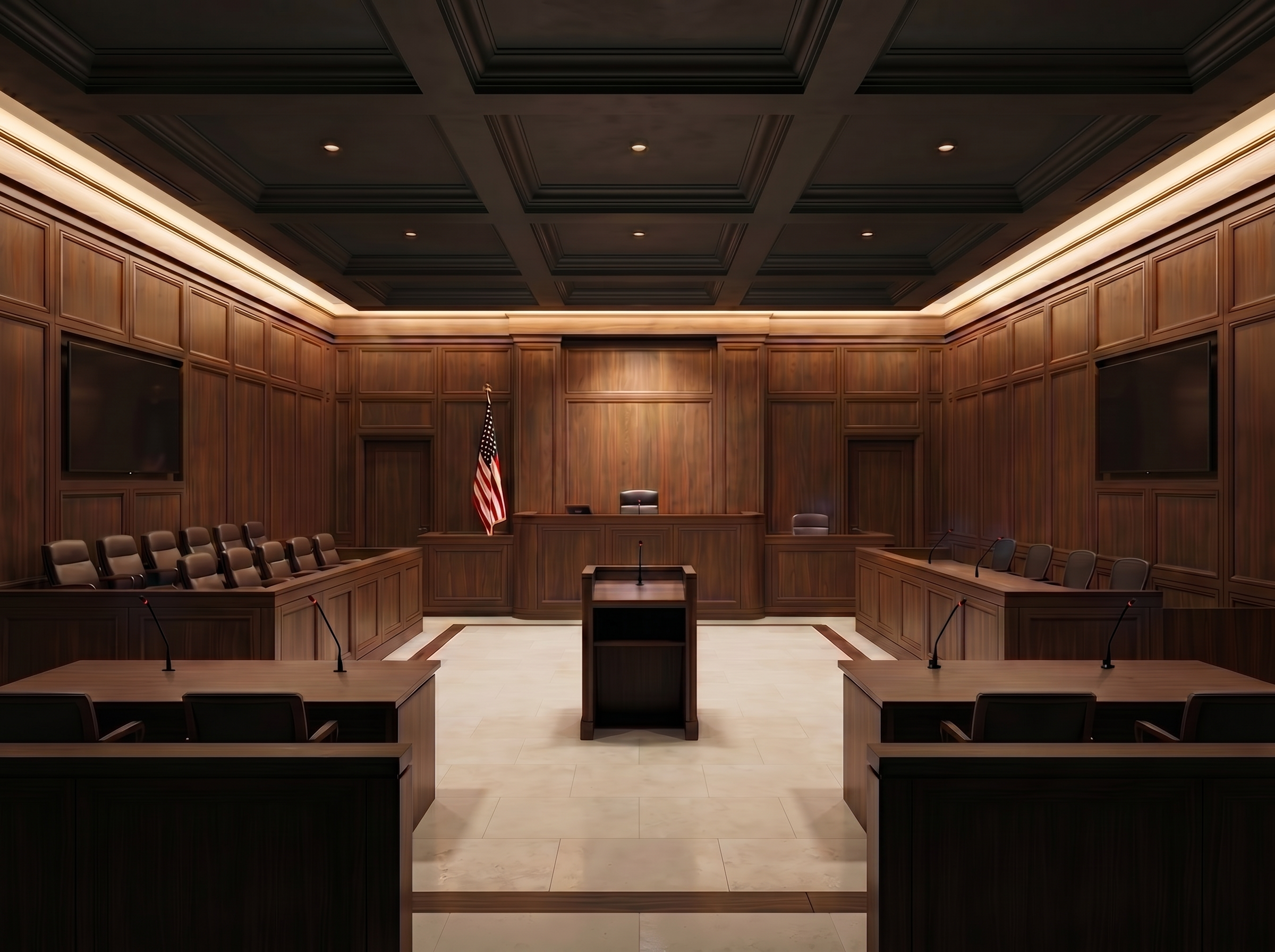
In most commercial spaces, poor audio leads to frustration, delays, or inefficiency. In a courtroom, it can affect the official record, the outcome of proceedings, and in some cases, the integrity of the case itself. That changes the standard immediately.
This is not about creating a good meeting experience. It is about capturing speech accurately, consistently, and without ambiguity.
Every participant, from judges to attorneys to witnesses, must be heard clearly. Every statement must be captured in a way that holds up under scrutiny. Because in this environment, every word matters in a very literal sense.
What Makes Courtroom Audio Different
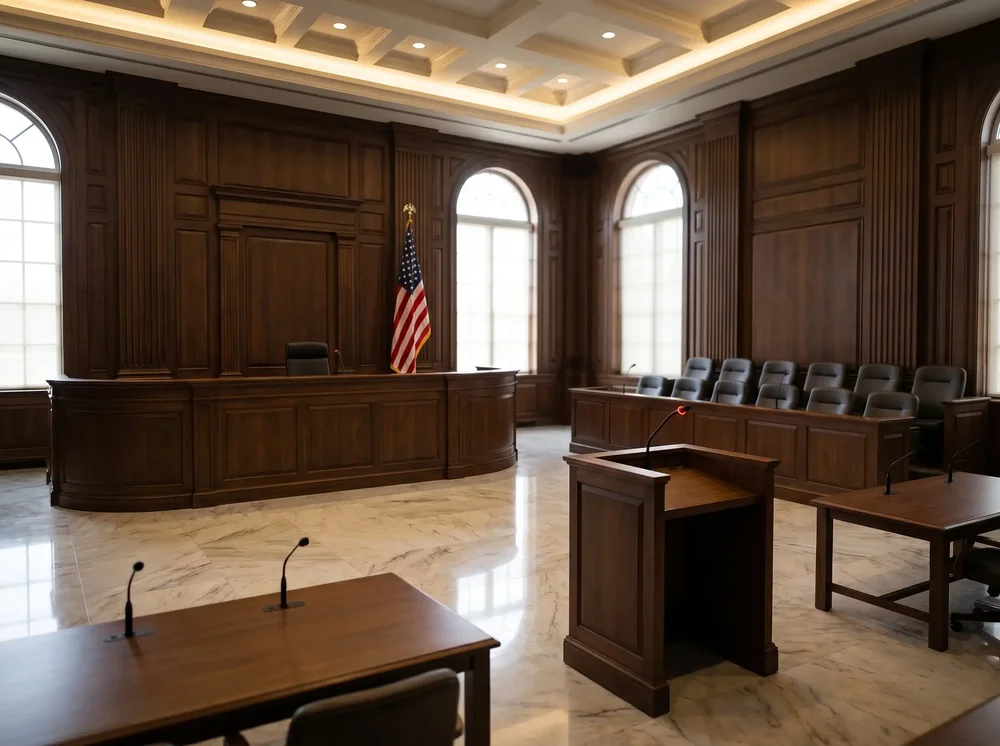
Courtrooms are structured environments, but they are not simple. There are multiple speaking positions, often fixed, but with very different roles. A judge speaking from the bench, attorneys addressing the court, witnesses providing testimony, clerks managing proceedings. Each position carries a different expectation for intelligibility and recording.
Unlike a boardroom, where occasional repetition might be tolerated, courtroom audio becomes part of the official record. That record may be referenced weeks, months, or years later. That means the system has to do more than perform in the moment. It has to preserve clarity over time. There is very little margin for inconsistency.
Why Close-Mic Approaches Still Dominate
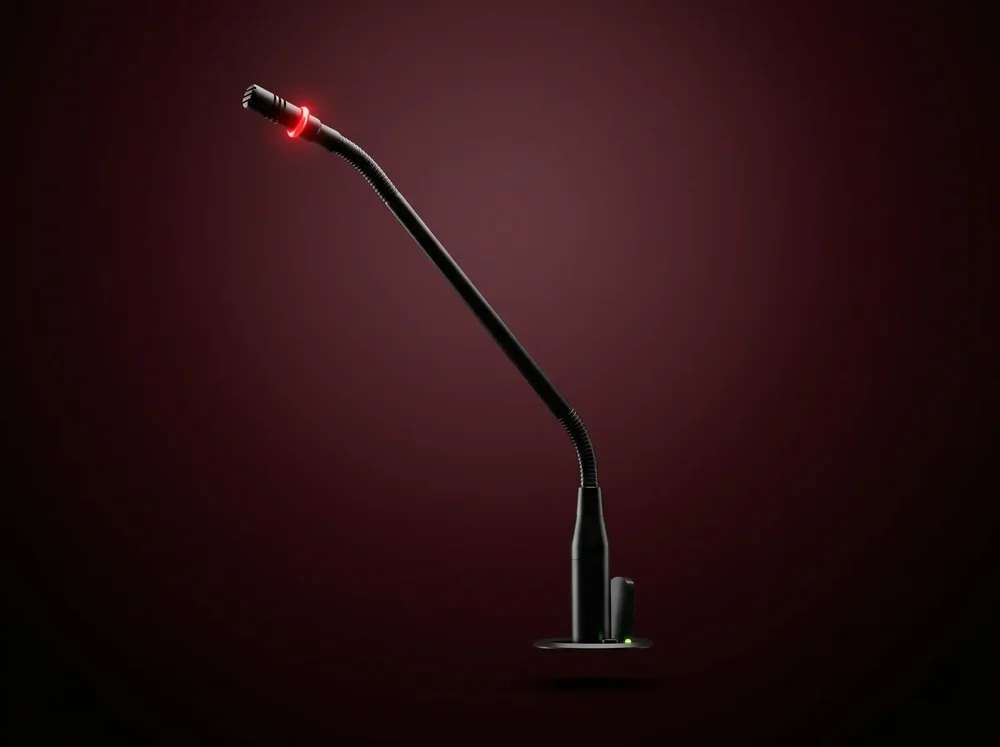
In most courtroom designs, gooseneck microphones remain the primary solution, and for good reason.
Proximity to the speaker is still the most reliable way to ensure intelligibility. A controlled pickup pattern allows the system to capture the intended voice while minimizing room noise and reflections.
This is especially important in environments where multiple microphones are active and where speech needs to be isolated by participant.
A witness speaking softly cannot be lost in the room. An attorney addressing the court cannot sound distant or inconsistent. The system must deliver predictable results regardless of speaking style or volume.
This is where close-mic approaches continue to outperform broader coverage solutions.
Consistency Across Positions
One of the more challenging aspects of courtroom design is maintaining consistent audio across all speaking positions.
The judge’s bench, the witness stand, attorney tables, and any additional speaking areas all need to deliver comparable intelligibility. Differences in level or clarity between positions can create gaps in the record. That requires careful attention to microphone selection, placement, and gain structure.
It also requires thinking about how participants actually behave. Not every speaker maintains perfect mic technique. Some lean back. Some turn their head. Some speak more quietly than expected. The system has to accommodate that variability without sacrificing clarity.
Recording Integrity and Redundancy
Unlike most professional AV systems, courtroom audio is not just for live reinforcement. It is often recorded and archived. That introduces another layer of responsibility. The system must ensure that:
- Speech is captured clearly at the source
- Recordings are complete and reliable
- Audio can be referenced without ambiguity
Redundancy becomes part of the design conversation. Backup recording paths, reliable signal capture, and system stability are all critical.
If a system fails in a conference room, it disrupts a meeting. If it fails in a courtroom, the consequences are significantly greater.
Managing Noise and Room Acoustics
Courtrooms can present unique acoustic challenges. Hard surfaces, high ceilings, and large open areas can introduce reflections and background noise. Paper movement, chair shifts, and general activity within the room all contribute to the acoustic environment. Because courtroom microphones are often active for extended periods, managing that background noise is critical.
Close-mic placement helps reduce the impact of the room, but it does not eliminate the need for thoughtful design. Microphone positioning, pickup patterns, and system tuning all play a role in maintaining clarity.
User Interaction Still Matters
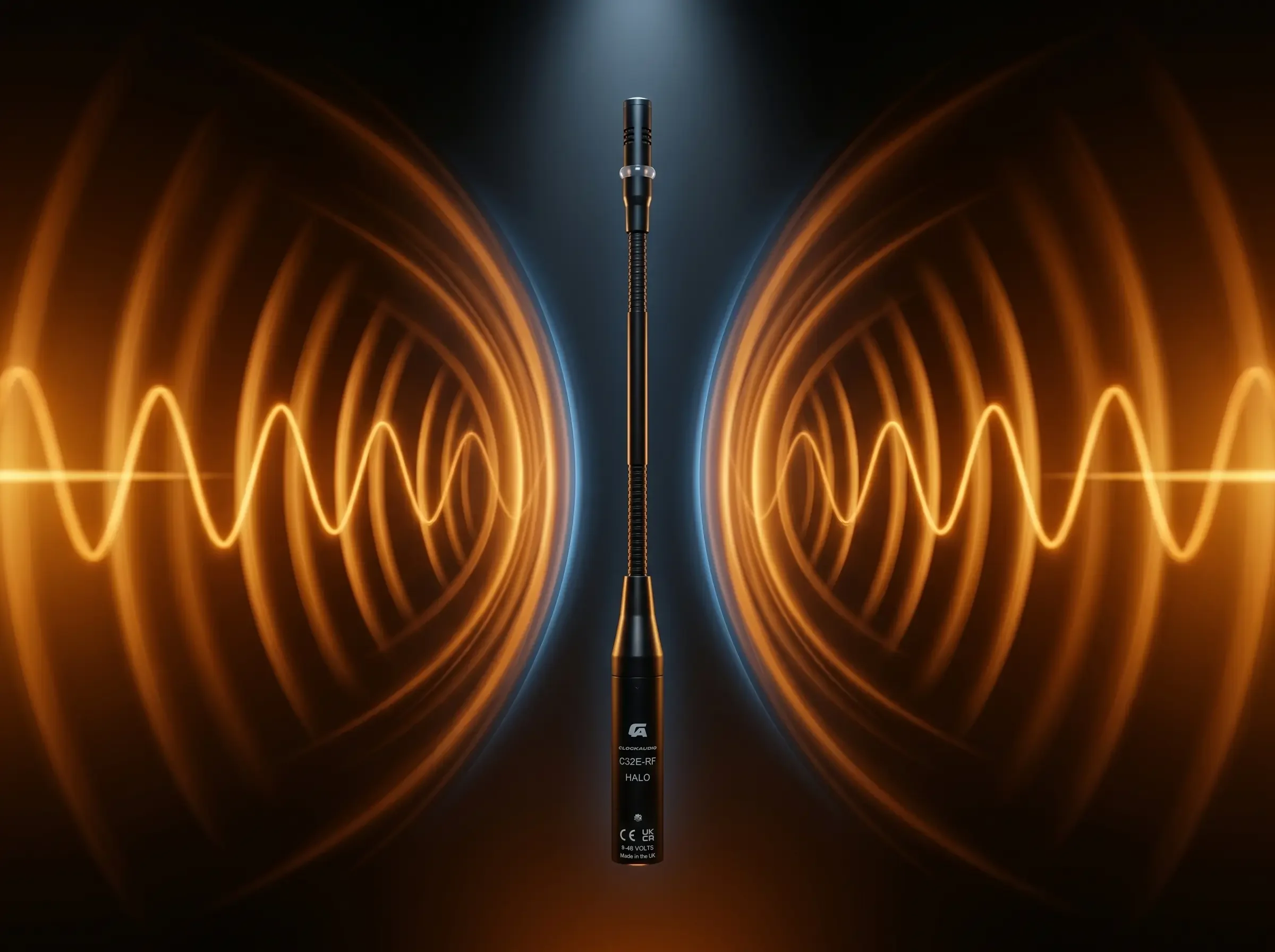
Even in structured environments, user interaction cannot be ignored. Participants need to understand when they are live, when they are muted, and how to engage with the system. Clear LED status indicators and intuitive controls help reduce confusion and ensure that speech is captured when it matters.
In a courtroom, hesitation or uncertainty can interrupt the flow of proceedings. The system should support the process, not become part of the problem. When the interface is clear, participants focus on the proceedings rather than the technology.
What Clearly Different Means in Courtroom Design
Courtroom audio systems are not designed for flexibility. They are designed for reliability.
At Clockaudio, the focus in these environments is on delivering microphone solutions that provide consistent, accurate speech capture, regardless of who is speaking or where they are positioned.
That means prioritizing proximity, control, and clarity over convenience. Because in a courtroom, there is no tolerance for uncertainty.

The Last Word
Designing courtroom audio systems requires a different mindset. It is not about accommodating a range of use cases. It is about ensuring that one use case, clear and accurate speech capture, is delivered without compromise.
When that is achieved, the system supports the proceedings exactly as intended. When it is not, the impact extends far beyond the room. In this environment, the standard is clear.
Every word matters.
Let's Keep the Conversation Going
If you are working on courtroom or legal environment designs, how are you approaching consistency and recording integrity?
If you want to walk through a current project or discuss microphone strategies for these types of spaces, our technical and design team is always available to help develop the right approach.
Talk Through Your ApplicationClockaudio USA serves as the U.S. and Mexico office and distributor for Clockaudio, a globally respected manufacturer of professional microphone solutions. Built on more than three decades of innovation and trust, Clockaudio USA delivers application-driven performance, engineering precision and streamlined project execution for the professional AV market.
For the latest information on products, news, and projects, follow Clockaudio on LinkedIn, Facebook, and Instagram.