

Boundary vs Gooseneck vs Ceiling Microphones: A Practical Guide for Real-World AV Design
This is one of those decisions that looks simple early on and becomes much more complicated once the room starts taking shape.
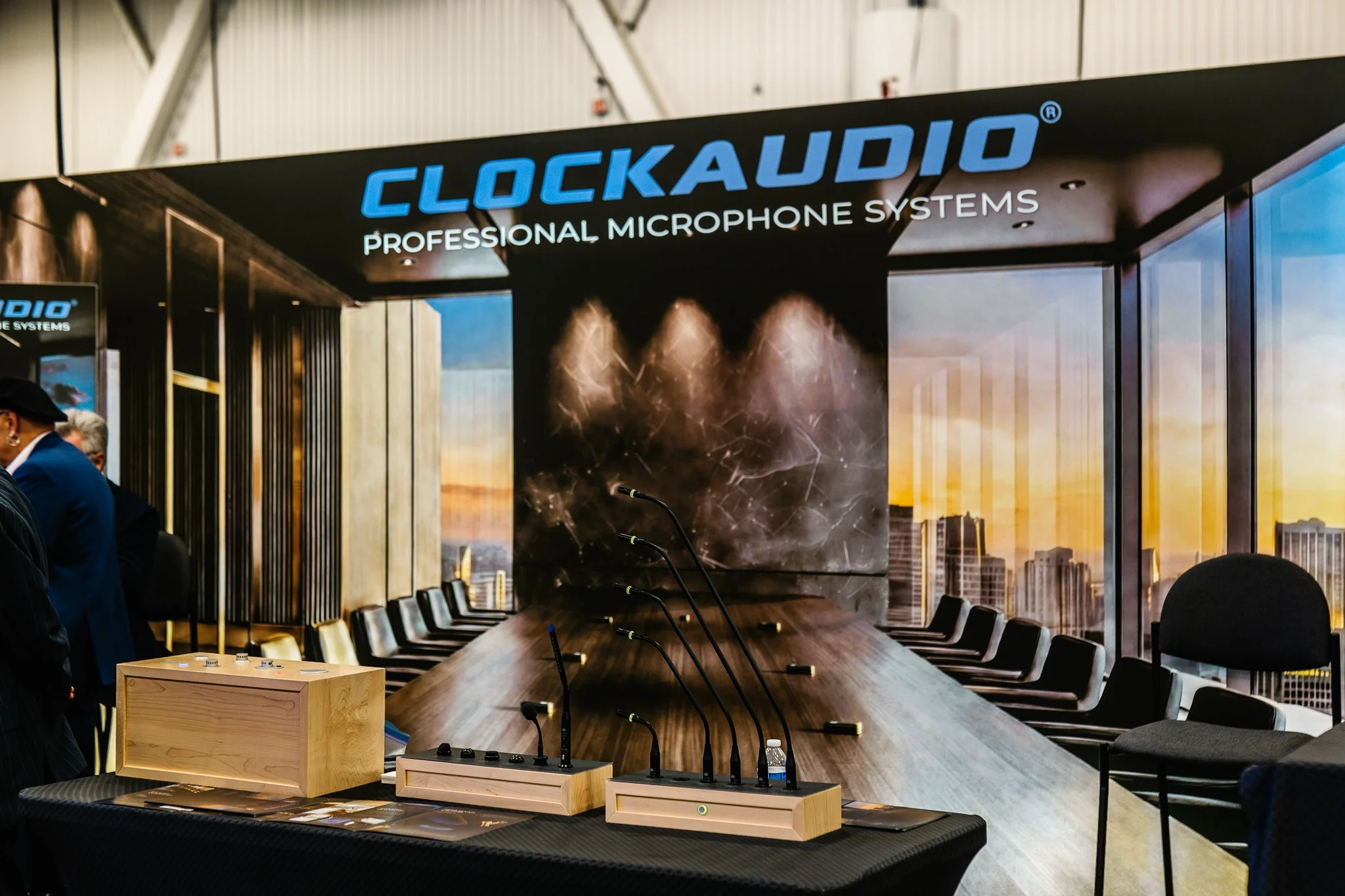
On paper, boundary microphones, gooseneck microphones, and ceiling microphones can all be positioned as viable solutions for conference and collaboration spaces. In practice, each one behaves very differently once people enter the room, start moving, and begin using the space the way they actually do.
Most integrators have had the experience of inheriting a design direction that favors aesthetics or simplicity, only to spend time later compensating for inconsistent audio capture.
The goal here is not to identify a single "best" microphone type. It is to understand where each approach performs well, where it starts to break down, and how to make the right decision based on the realities of the space. Because when the room is in use, those decisions become very visible.
- Gooseneck — control and consistency. Close-mic placement, predictable gain structure, defined seating.
- Boundary — simplicity in smaller spaces. Low profile and cost-effective when the room stays controlled.
- Ceiling — flexibility and clean design. Frees the table, but depends on placement and room acoustics.
Start with the Room, Not the Product
The conversation usually starts with microphone types, but it should really start with the room itself.
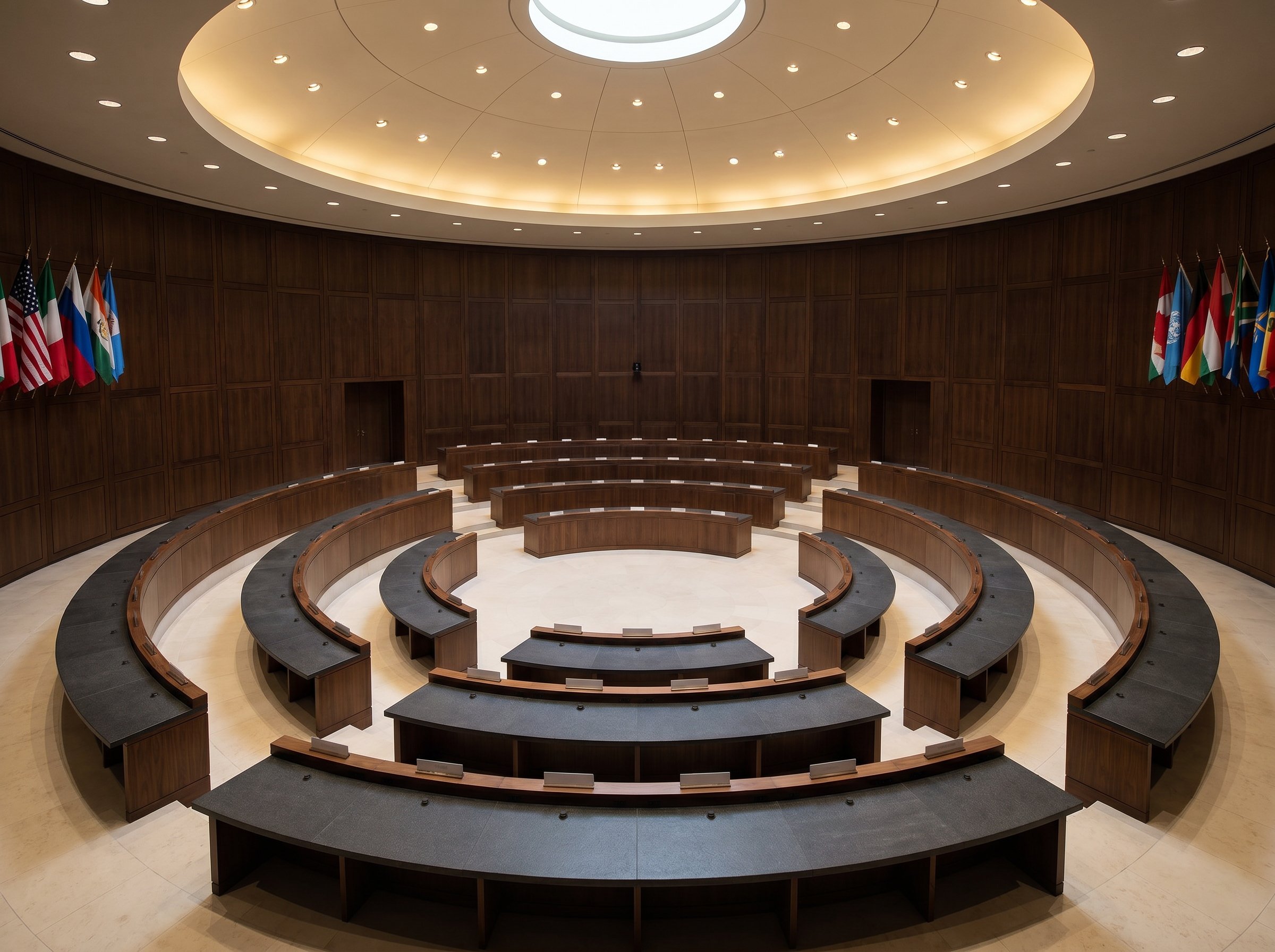
Consider how the space will actually function. Is it a formal boardroom where participants remain seated and take turns speaking? Is it a strategy or war room where people move around, collaborate, and shift positions throughout the meeting? Is it a divisible conference space that needs to adapt to different layouts? Or is it a courtroom or council chamber where speech needs to be captured with absolute consistency and accuracy?
The more structured the environment, the more control you can apply to microphone placement and pickup. The more flexible or unpredictable the space, the more you have to account for variation. That context drives the choice.
Gooseneck Microphones: Control and Predictability
In environments where intelligibility cannot be compromised, gooseneck microphones continue to set the standard.
The advantage is straightforward. You are placing the microphone close to the talker, using a controlled pickup pattern, and capturing speech before the room has a chance to interfere. That proximity gives you consistency across users and reduces reliance on digital signal processing to correct issues later.
This is why gooseneck microphones are still widely used in executive boardrooms, courtrooms, and council chambers. In these spaces, there is usually a defined seating arrangement and an expectation that each participant has a clear, dedicated position.
From a system design standpoint, this approach simplifies a number of variables. Gain structure is more predictable. Background noise is easier to manage. The far end receives a more consistent signal.
There is also a user benefit. With integrated LED indicators and tactile mute controls, participants know when they are active. That reduces hesitation and keeps the conversation moving.
The tradeoff is visibility. Gooseneck microphones are part of the table environment, and in some projects, that becomes a point of discussion with architects and designers.
That conversation is worth having early, because the performance advantage is difficult to replace once it is removed.
Boundary Microphones: Simplicity with Limits
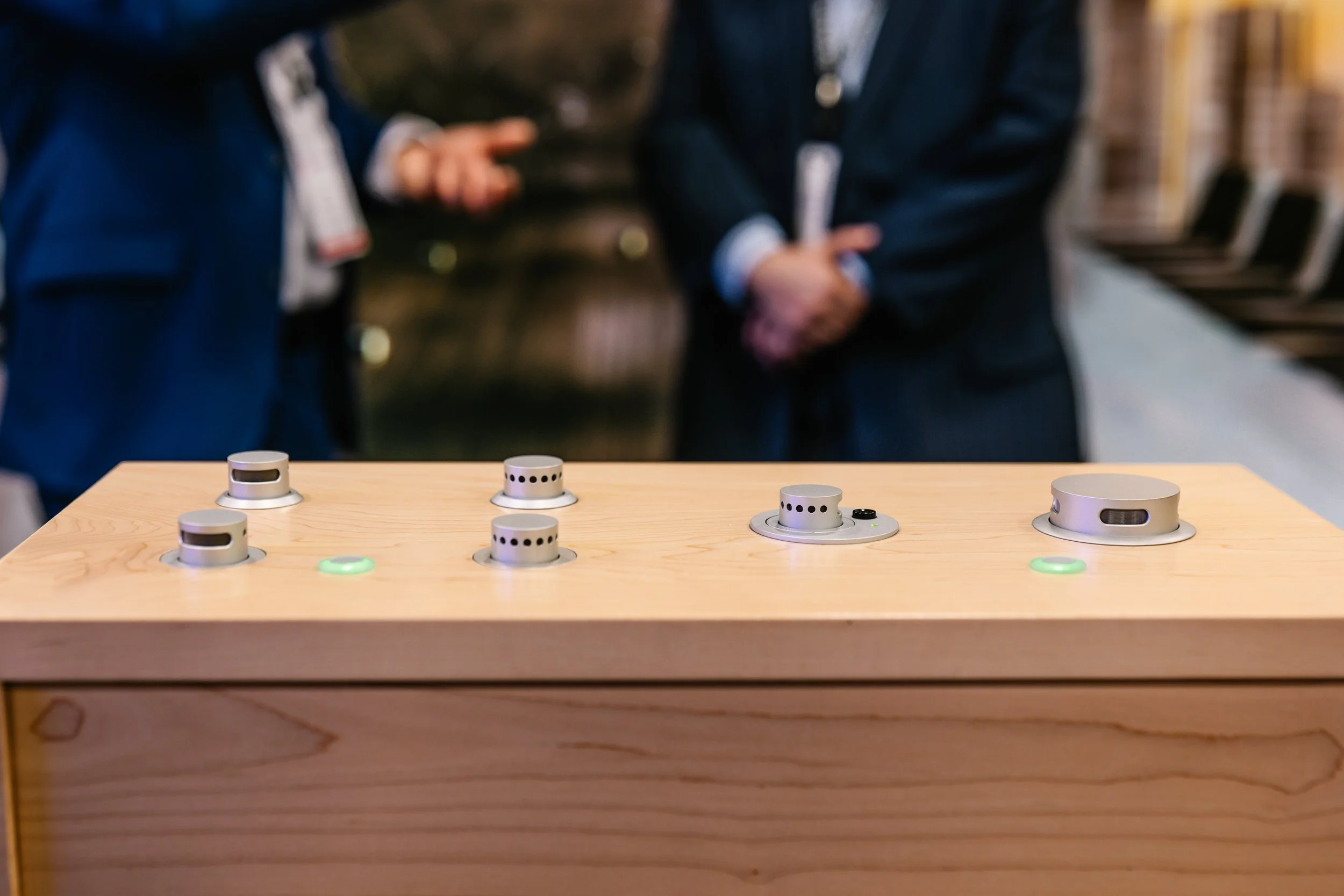
Boundary microphones are often introduced as a low-profile, cost-effective solution, and in the right conditions, they can perform well. They are typically used in smaller meeting rooms where participants remain seated, the table layout is consistent, and the acoustic environment is relatively controlled.
When those conditions hold, boundary microphones can provide adequate coverage with minimal visual impact.
The challenge appears as soon as the room becomes less predictable.
Because boundary microphones rely on a broader pickup area, they capture more of the room along with the voice. As participants shift positions, lean back, or speak across the table, intelligibility can vary. Background noise and reflections become more prominent, especially in larger spaces or rooms with harder surfaces.
This does not make boundary microphones ineffective. It means they are more sensitive to changes in the environment and user behavior.
They are often a good fit for smaller, less critical spaces. In larger or higher-stakes environments, they tend to introduce variables that are harder to control.
Ceiling Microphones: Flexibility and Design Alignment
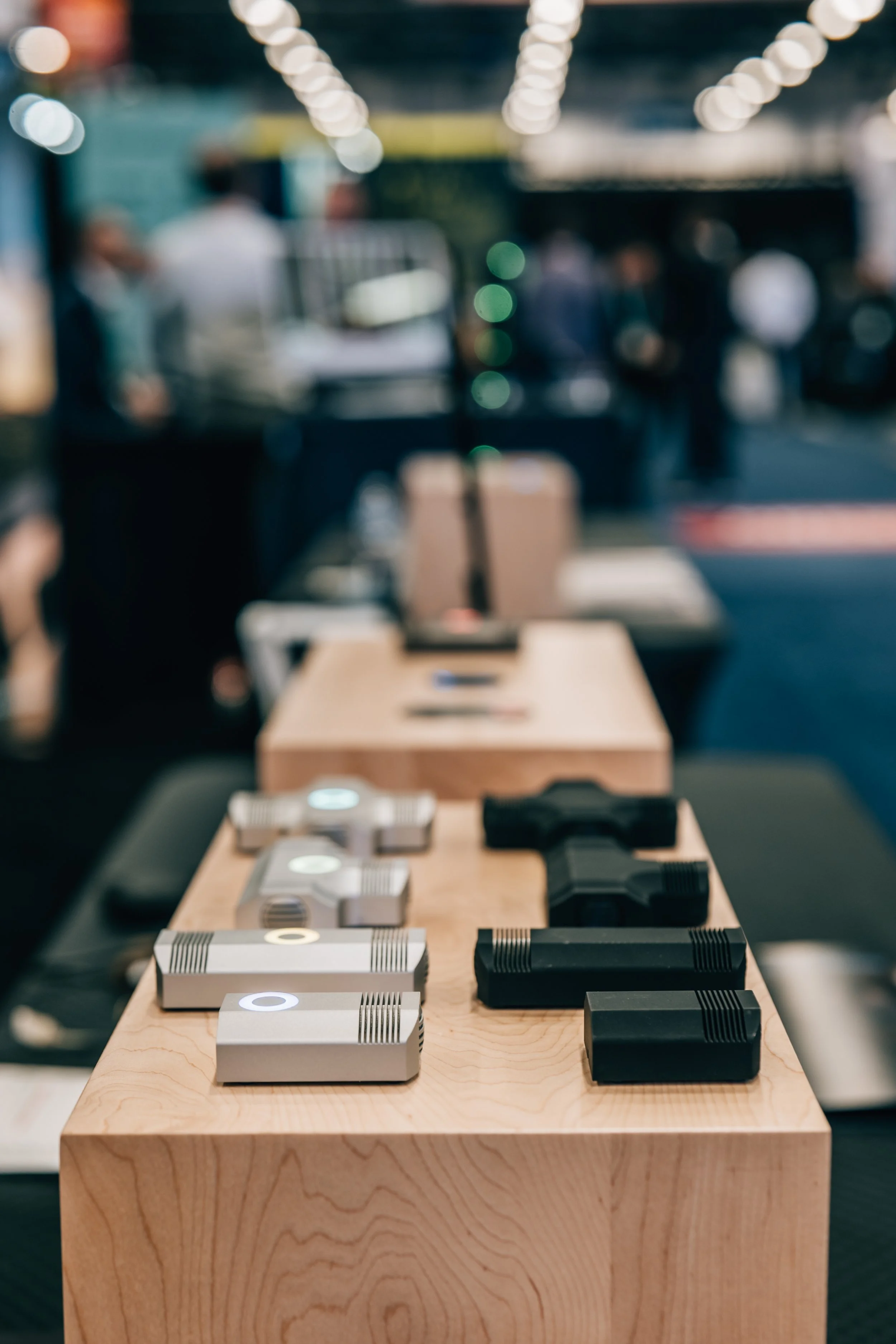
Ceiling-based microphone systems are being specified more frequently, particularly in modern corporate environments.
The appeal is clear. Removing microphones from the table creates a cleaner aesthetic, supports flexible furniture layouts, and reduces the number of visible devices in the room. In spaces that are reconfigured regularly or designed with strong architectural intent, this approach aligns well with the overall vision.
From a performance standpoint, the conversation becomes more nuanced.
Ceiling microphones rely heavily on placement, room acoustics, and beamforming behavior to achieve consistent pickup. Ceiling height, talker position, and surface reflections all influence how effectively the system captures speech.
When the design is carefully executed, ceiling microphones can provide a balanced solution for rooms that need both flexibility and acceptable intelligibility. They are particularly useful in collaborative spaces, training rooms, and conference environments where participants are not fixed in one position.
However, they require more upfront planning and a clear understanding of the room. Without that, the system can struggle to maintain consistency, especially in larger or acoustically challenging spaces.
They are not a shortcut to clean design. They are a different design approach with its own set of requirements.
The Reality of the Table
This is where many design decisions deserve a second look.
There is often a strong push to maintain a clean, uninterrupted table surface. On drawings, that looks ideal. In use, it rarely holds.
As soon as a meeting begins, the table fills with laptops, papers, phones, notepads, and glasses. These are not exceptions. They are part of how people work, especially in long or high-stakes meetings.
Those objects introduce reflections, block line-of-sight pickup, and change the acoustic behavior of the space. Designing a system around an empty table ignores how the room actually functions.
This is where integrators and consultants need to advocate for performance. The goal is not to push back on design, but to ensure that the function of the room is preserved.
If the purpose of the space is to support critical communication, the system has to be designed to capture that communication reliably, even when the room is fully in use.
Which Approach Is the Most Flexible?
Flexibility depends on how you define it. If flexibility means adapting to different seating arrangements and room configurations, ceiling microphones provide the most freedom. They allow the space to change without requiring physical adjustments to the system.
If flexibility means consistent, predictable performance regardless of who is speaking or where they are seated, gooseneck microphones are still the most reliable option.
Boundary microphones sit somewhere in between, offering simplicity but less control as conditions change.
In most high-performance environments, the decision is not strictly one or the other. Hybrid approaches are often used, combining the strengths of different microphone types to meet both performance and design goals.
What Clearly Different Looks Like in Practice
The difference between a system that meets expectations and one that exceeds them often comes down to how these choices are made. At Clockaudio, the focus is on providing microphone solutions that give integrators the ability to design for real-world conditions, not idealized ones. That means supporting close-mic applications where precision is required, as well as flexible solutions for evolving spaces.
The goal is not to force a single approach, but to enable the right one for the application.
Because in environments where communication drives outcomes, there is very little margin for error.
The Last Word
Boundary, gooseneck, and ceiling microphones each have a place in modern AV design. The key is understanding what problem each one is solving and how it will perform once the room is in use.
Designing for appearance alone rarely holds up. Designing for performance, with a clear understanding of how the space will be used, leads to systems that work consistently and earn the trust of the people using them.
In spaces where decisions matter, that consistency is not optional.
Every word matters.
Let's Keep the Conversation Going
How are you approaching this balance between performance and design in your current projects?
Are you seeing more pressure to move toward ceiling-based solutions, or are clients still prioritizing close-mic performance in critical spaces?
If you are working through a design or evaluating options for an upcoming project, our technical and design team is always available to talk through your application and help develop a solution that aligns with how your space will actually function.
Talk Through Your ApplicationClockaudio USA serves as the U.S. and Mexico office and distributor for Clockaudio, a globally respected manufacturer of professional microphone solutions. Built on more than three decades of innovation and trust, Clockaudio USA delivers application-driven performance, engineering precision and streamlined project execution for the professional AV market.
For the latest information on products, news, and projects, follow Clockaudio on LinkedIn, Facebook, and Instagram.