
There’s a moment most of us have seen more times than we’d like.
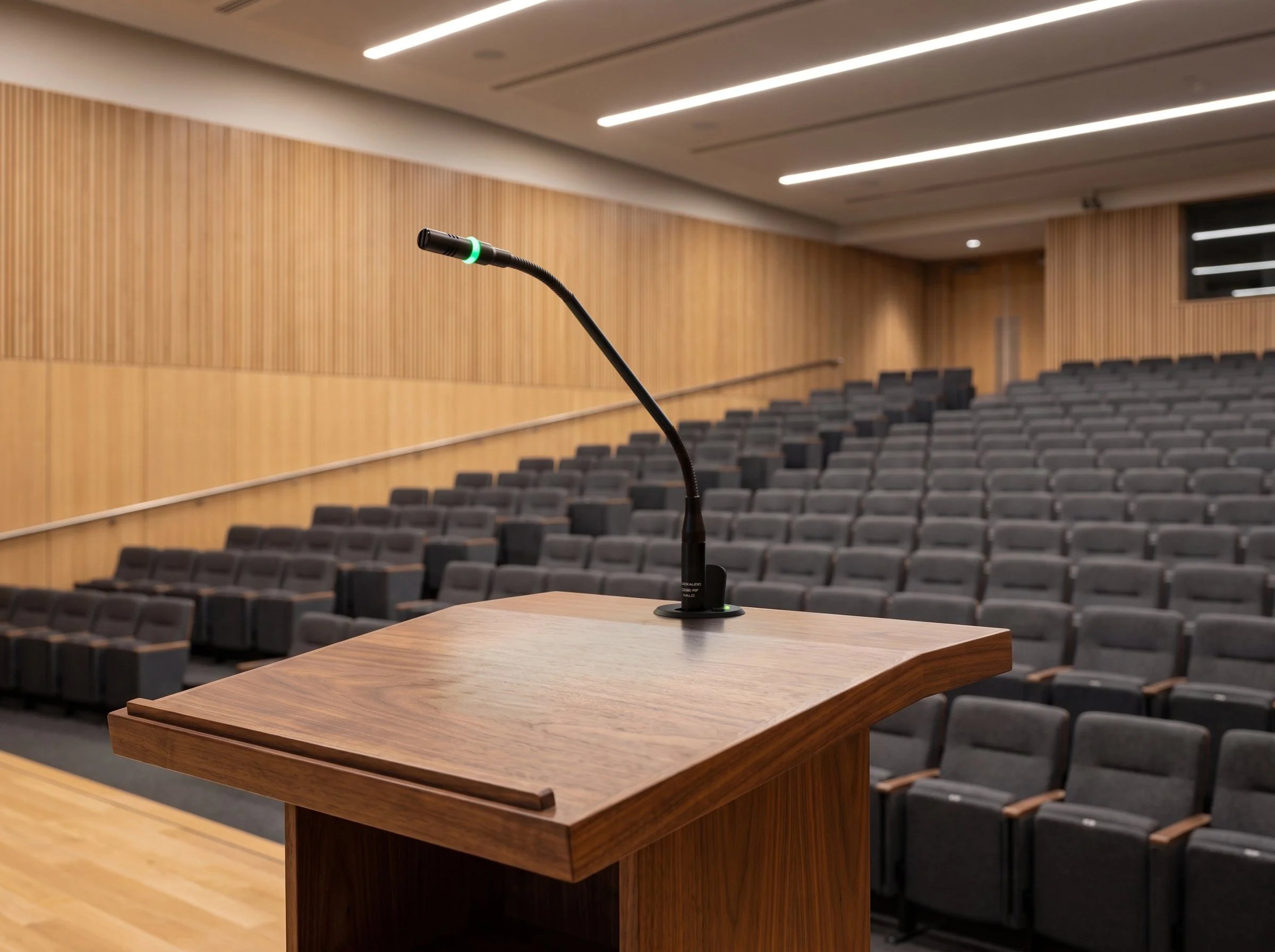
Someone starts speaking in a meeting. They pause. Look down. Tap the microphone. Ask, “Am I on?” Someone across the table says, “You’re muted.” They tap again. The conversation resets.
It seems minor, but in a room where timing matters, it breaks flow immediately.
In mission-critical environments, those small interruptions add up. They slow decision-making, create hesitation, and reduce confidence in the system. This is the part of system design that often gets overlooked. Not the signal path. Not the DSP. The user experience.
Because no matter how well a system is engineered, if the user isn’t sure how to interact with it, performance suffers.
Where Good Systems Start to Fail
From a technical standpoint, many systems are designed correctly. Gain structure is solid, microphones are appropriate for the space, and processing is tuned well. Then the room goes live.
Users hesitate before speaking. They double-check mute states. They speak too softly because they’re unsure if the system is active. Others talk over each other because they assume the system will “pick it up.”
None of these issues are rooted in hardware performance. They come from uncertainty. When users don’t trust the interface, they change their behavior. That behavior affects how the system performs.
In hybrid environments, the impact is even more obvious. Remote participants hear delays, missed words, or uneven levels. What feels like a user issue quickly becomes a system issue.
The Role of Visual Feedback
Clear visual feedback is one of the simplest ways to eliminate uncertainty.
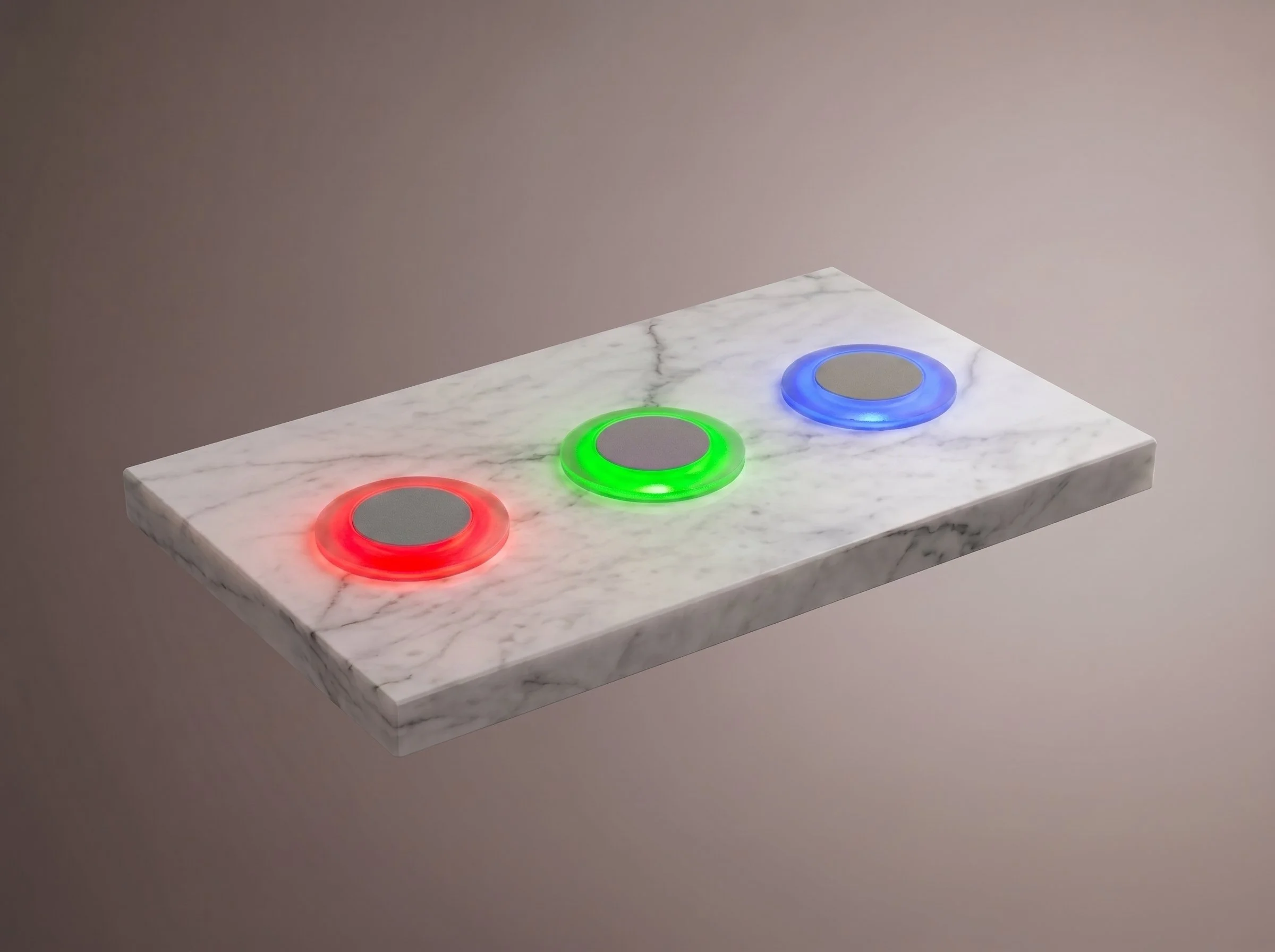
LED status indicators on microphones are often treated as a small feature, but in practice they carry a lot of weight. A clear, visible indication of whether a microphone is active, muted, or ready removes guesswork. It allows participants to focus on the conversation rather than the system.
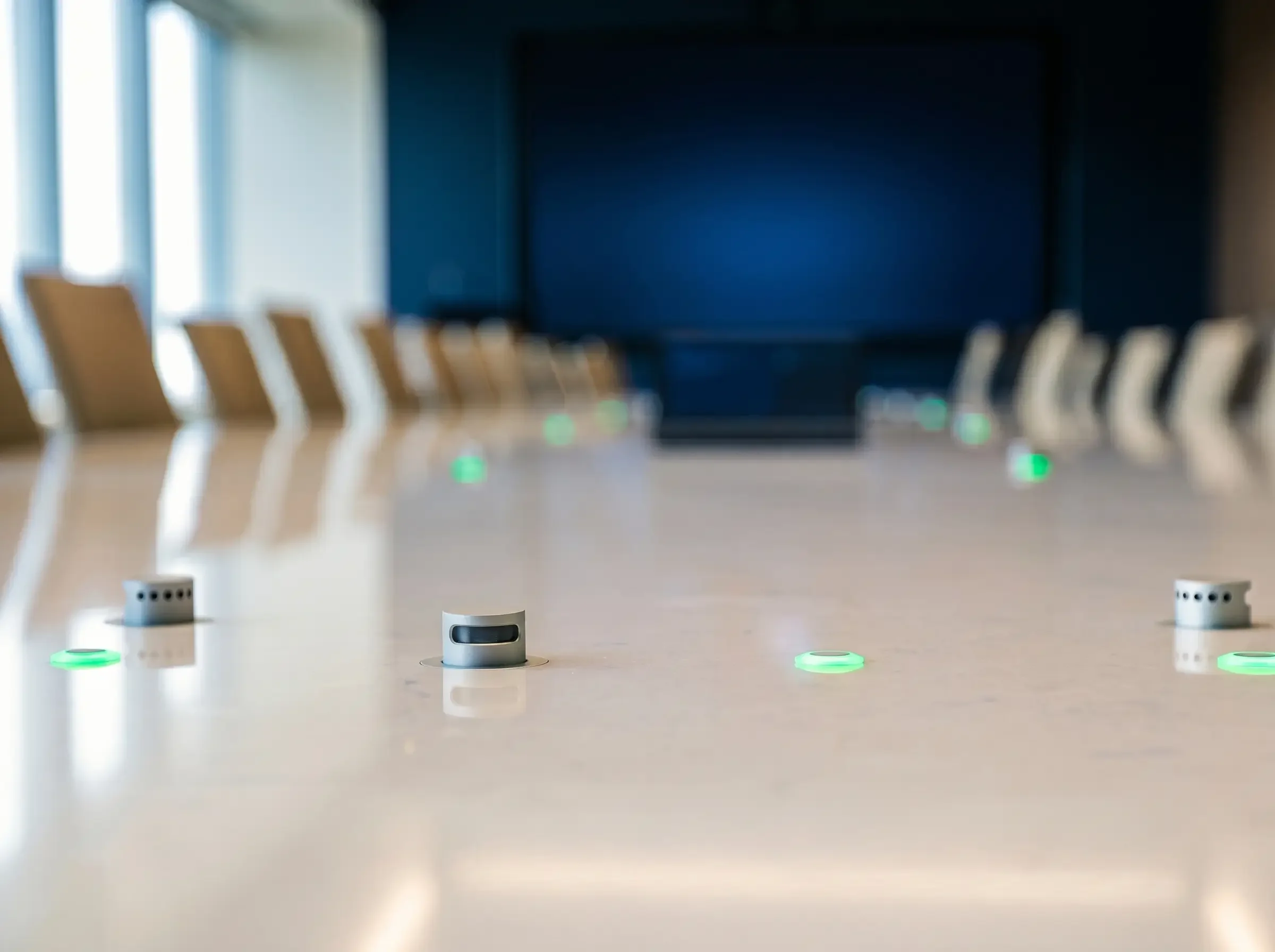
In environments where multiple microphones are in use, this becomes even more important. Participants can see at a glance who is live and when they can speak.
This is not just about convenience. It is about maintaining the flow of communication.
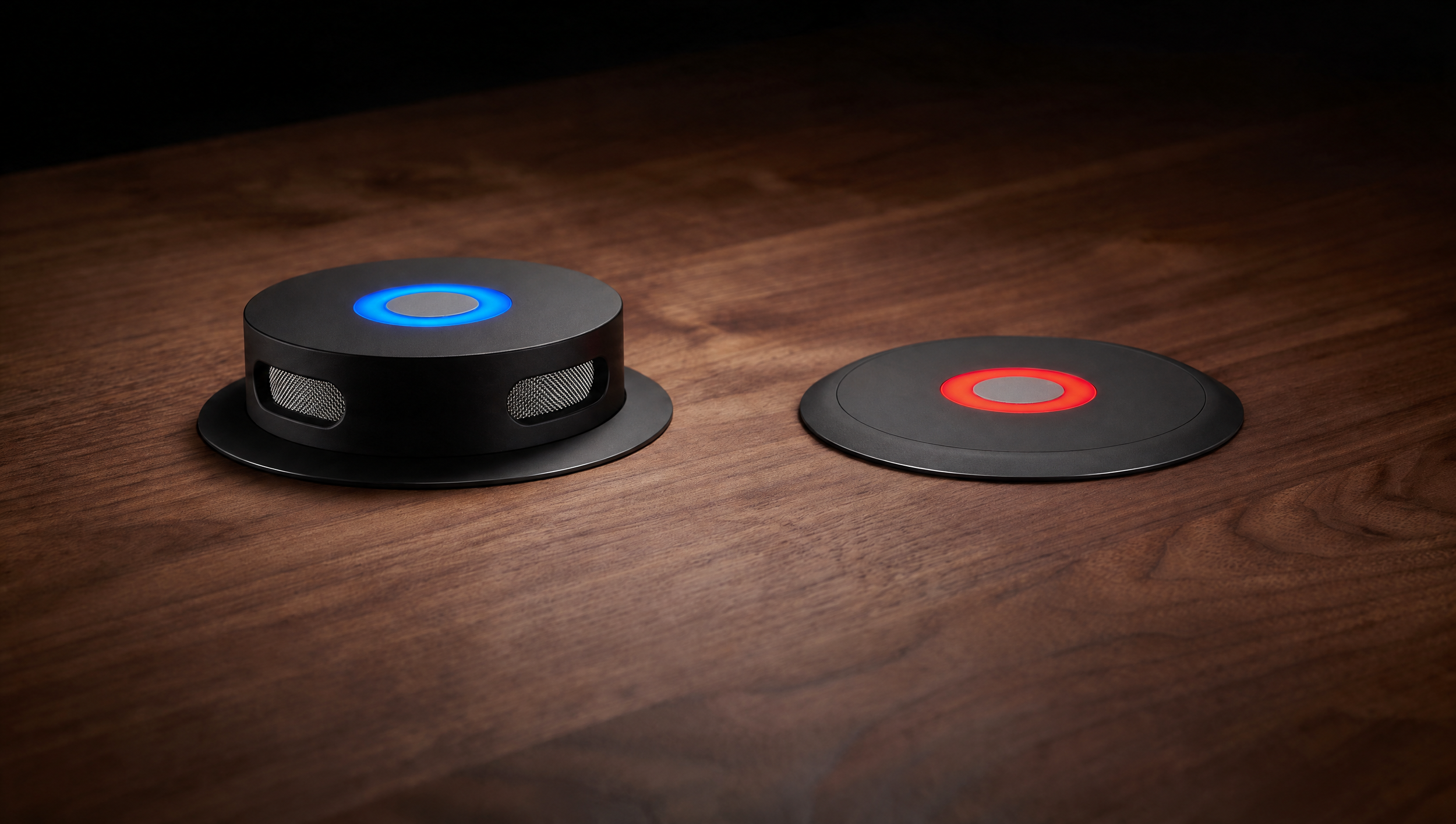
Clarity is confidence.
Mute Control Is Not a Small Detail
Mute functionality is another area where small design decisions have a large impact. In theory, muting a microphone is simple. In practice, it is one of the most interacted-with elements in the system.
If the control is unclear, unresponsive, or inconsistent, users lose trust quickly. They begin to overcompensate, tapping repeatedly, speaking cautiously, or asking for confirmation. That hesitation carries into the conversation.
Tactile, responsive mute controls, combined with clear visual feedback, create a predictable interaction. Users know what will happen when they engage the system. That predictability is what allows conversations to move forward without interruption.
Designing for Real User Behavior
One of the challenges in AV design is that systems are often tested under ideal conditions. A few people in a room. Controlled conversation. Clear understanding of how the system works. That is not how most rooms are used.
In real scenarios, participants are focused on the meeting, not the technology. They are multitasking, referencing materials, joining remotely, and moving between discussions.
Under those conditions, the system needs to be intuitive enough that it disappears.
If a participant has to think about how to use the microphone, the design has already introduced friction. This is why user interface considerations should be part of the initial design conversation, not something addressed at the end.
The Impact on System Performance
It is easy to separate “user experience” from “system performance,” but in practice they are tightly connected. A well-designed system with poor user interaction will not perform consistently.
A system with clear feedback and intuitive controls will often outperform a more complex system simply because users engage with it correctly. In high-stakes environments, that consistency matters.
When participants trust the system, they speak naturally. When they speak naturally, the system captures speech more effectively.
That is where design intent translates into real-world performance.
Where This Fits in the Bigger Picture
As systems become more advanced, there is a tendency to focus on features, processing power, and integration capabilities. Those elements are important, but they do not replace clarity at the point of interaction.
Microphones are the front line of communication. They are where users engage directly with the system. Features like LED status indication and intuitive mute control are not just add-ons. They are part of the overall system design.
At Clockaudio, the focus is on delivering microphone solutions that support both performance and usability, so integrators can design systems that work the way users expect them to. Because the goal is not just to capture sound. It is to support clear, uninterrupted communication.
The Last Word
It is easy to overlook the small details in system design, especially when the focus is on larger architectural or technical considerations. In practice, those small details often determine how the system performs day to day.
A clear LED. A responsive mute button. An interface that makes sense without explanation. These are the elements that remove hesitation and allow conversations to flow naturally. In environments where communication drives outcomes, that flow is critical.
Every word matters.
Let's Keep the Conversation Going
How are you approaching microphone user interaction in your current designs?
Are you seeing more issues tied to user behavior, or are systems becoming more intuitive overall?
If you are working through a project or evaluating microphone solutions, our technical and design team is always available to walk through your application and help develop a system that performs as intended.
Talk Through Your ApplicationClockaudio USA serves as the U.S. and Mexico office and distributor for Clockaudio, a globally respected manufacturer of professional microphone solutions. Built on more than three decades of innovation and trust, Clockaudio USA delivers application-driven performance, engineering precision and streamlined project execution for the professional AV market.
For the latest information on products, news, and projects, follow Clockaudio on LinkedIn, Facebook, and Instagram.